Picture this: you open a cabinet to grab a can of tomatoes, and a bag of rice slides out onto your foot. If your kitchen has no real pantry, that moment probably feels familiar. Groceries end up on the counter, on top of the fridge, and crammed into random drawers.
The good news is that you do not need a walk-in pantry to get well-organized kitchen storage. With the right small kitchen pantry ideas, even one narrow corner can hold your dry goods, canned goods, snacks, and baking supplies.
This guide shares 15 space-saving pantry ideas for every situation: kitchens with no pantry, tiny closets, and pantries that are already packed. You will also get measuring tips, a 5-step pantry organization plan, a budget guide, and clear answers to the questions people ask most.
Many ideas are renter-friendly, so they work in an apartment kitchen without drilling or damaging walls.
Table of Contents
What Are the Best Small Kitchen Pantry Ideas?
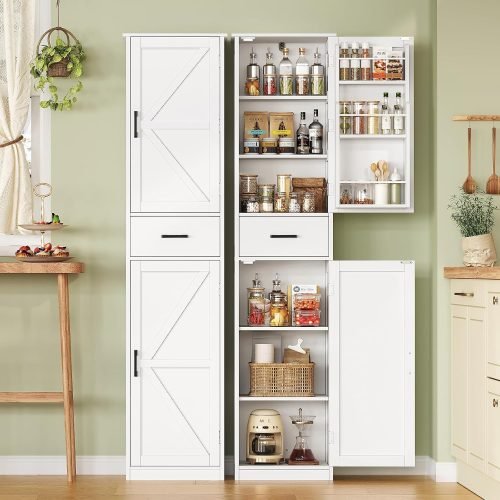
The best small kitchen pantry ideas are a repurposed kitchen cabinet, a slim rolling pantry cart, a cube shelf or bookcase, an over-the-door organizer, and a slim pull-out pantry. Add clear bins, labels, and zones for everyday items, and almost any gap can become organized pantry storage.
Which Small Pantry Idea Fits Your Kitchen Space?
Not sure where to start? Find your situation below and jump to the ideas that match.
| Your situation | Best place to start | Ideas in this guide |
|---|---|---|
| I have no pantry at all | Cabinets, carts, cube shelves, and door racks | Ideas 1 to 7 |
| I have a tiny closet or nook | Pull-out pantries, tall cabinets, and under-stairs storage | Ideas 8 to 12 |
| I have a pantry, but it is a mess | Shelf risers, lazy Susans, and pantry zones | Ideas 13 to 15 and the 5-step setup |
Swipe left or right to view all columns →
How to Measure and Plan Your Small Pantry Space Before You Buy Storage
This step takes five minutes and prevents the most common mistake: buying pantry organizers that do not fit.
Grab a tape measure and write down these numbers:
- Width and height of the space you plan to use
- Shelf depth. Around 10 to 14 inches works well for most pantry shelving. Deeper shelves tend to swallow items at the back unless you add pull-out bins or baskets.
- Your tallest items, such as cereal boxes and oil bottles, so you can adjust the shelves to fit them
- Door clearance, so the door can open fully, especially if you plan to hang a rack on it
- Floor width for carts, including room to pull the cart out
Then add a margin of one to two inches to every measurement. Boxes and jars never fit as perfectly as you imagine.
Finally, think about how you actually cook. If you grab coffee, oats, and snacks every day, keep them at eye level and close to where you work. Plan your kitchen organization around daily habits, not just how much you can store.
Small Kitchen Pantry Ideas for Kitchens With No Pantry: Renter-Friendly Storage
No closet, no spare cabinet, no problem. These first seven ideas turn everyday furniture and unused wall space into pantry storage.
Each idea shows a cost level: Low (under 25 USD), Medium (25 to 75 USD), or Higher (75 USD and up). Prices vary by store, so treat these as rough guides.
1. Turn a Kitchen Cabinet Into a Pantry Cabinet
Best for: Small households with a spare cabinet. Cost: Low
The easiest pantry cabinet is one you already own. Pick a lower or upper cabinet near your stove or fridge, empty it, and use it only for food. Giving your canned goods, pasta, and snacks their own cabinet makes cooking feel calmer right away.
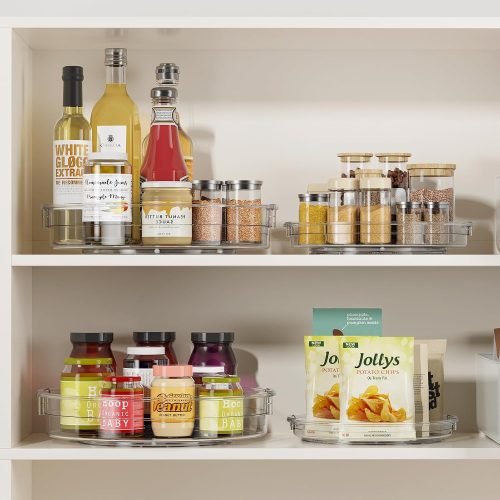
Add a lazy Susan (turntable) for oils and sauces, and a couple of clear bins for snacks and baking supplies. Keep heavy items, like canned goods, on the lowest shelf.
Example: Picture a cabinet next to the oven. Bottom shelf: canned tomatoes and beans. Middle shelf: pasta and rice in labeled bins. Top shelf: lighter snacks and cereal.
2. Use a Bookcase or Cube Shelf as Freestanding Pantry Storage
Best for: Renters and anyone with a spare wall. Cost: Medium
A simple bookcase or cube storage unit makes a roomy freestanding pantry with no installation. Slide baskets into the cubes to hide small packets, and keep jars and boxes on the open shelves.
Safety tip: Tall furniture can tip over. Secure it with an anti-tip furniture strap, especially around kids and pets. The strap needs a small wall anchor, so renters should check their lease first.
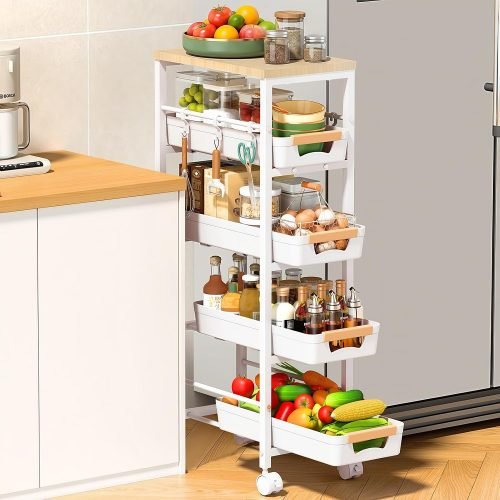
3. Add a Slim Rolling Pantry Cart for Narrow Gaps
Best for: Narrow gaps between the fridge and the wall. Cost: Low to Medium
A slim rolling pantry cart is one of the most flexible small kitchen storage solutions. Many fit into gaps only a few inches wide, so measure before you buy.
Store canned goods, spices, and snacks on it, and roll it out when you cook. Choose a cart with locking wheels, and keep heavy items on the bottom tier for stability.
4. Hang an Over-the-Door Pantry Organizer
Best for: Renters, apartments, and tiny closets. Cost: Low
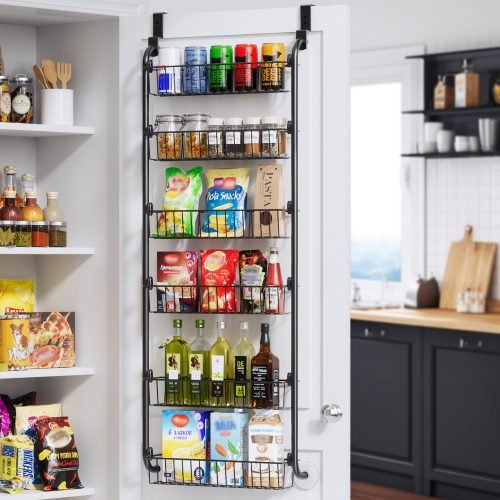
The back of a door is free storage space. A damage-free over-the-door pantry organizer can hold spices, snacks, foil, and small jars without any tools.
Check before you buy: Make sure the door still closes and that the rack’s weight limit fits your items. Heavy glass jars can overload a lightweight rack.
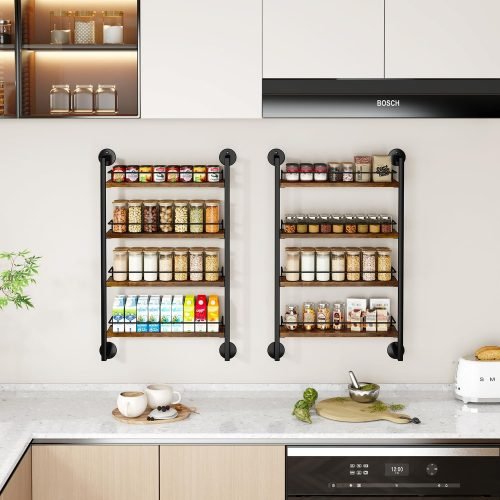
5. Install Floating Shelves for Open Pantry Storage
Best for: Unused corners or bare wall space. Cost: Medium
A few floating shelves can turn an empty wall into a mini pantry. Fill them with matching jars and baskets so your open pantry shelving looks like decor, not clutter.
This idea needs drilling, so renters should check their lease first. Use proper wall anchors, or screw into a stud, so the shelves can hold the weight of full jars.
6. Convert a Broom Closet or Hallway Closet Into a Closet Pantry
Best for: Homes with a spare closet near the kitchen. Cost: Low to Medium
A broom closet or a hallway closet can become a real closet pantry. Swap fixed shelves for adjustable shelving, then add bins to keep things sorted.
If the closet is a few steps from the kitchen, keep your everyday items (coffee, oats, snacks) in the kitchen and store bulk groceries in the closet.
7. Use Wall-Mounted Wire Baskets for Produce and Dry Goods
Best for: Onions, potatoes, and loose items. Cost: Low
Wall-mounted or hooked wire baskets use vertical space and let air flow around fresh produce. Keep onions and potatoes in separate baskets so they last longer.
Small Pantry Closet and Nook Ideas: Pull-Out, Tall, and Under-Stairs Storage
If you have a small closet, a gap beside the fridge, or an awkward nook, these ideas make every inch count. A well-planned reach-in pantry can hold as much as a much bigger room.
8. Install a Slim Pull-Out Pantry Cabinet
Best for: Narrow gaps beside the fridge or stove. Cost: Higher
A pull-out pantry slides out like a drawer, so you can see everything from top to bottom. These units can often fit in very narrow spaces, sometimes only around 6 to 12 inches wide.
They work especially well near your cooking area, so you can grab ingredients without crossing the kitchen. You can buy one ready-made or ask a carpenter to build one.
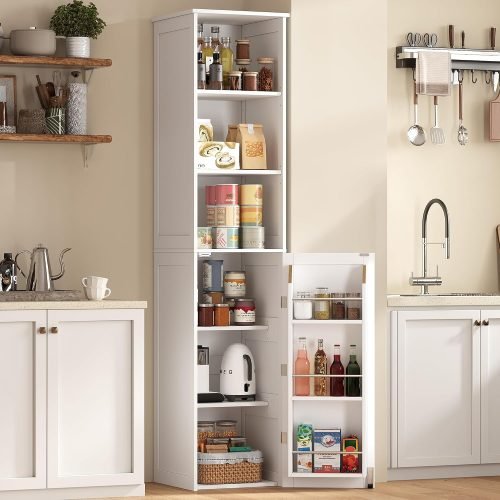
9. Choose a Tall, Narrow Pantry Cabinet for Vertical Storage
Best for: Kitchens with floor space but little counter space. Cost: Medium to Higher
If you cannot go wide, go tall. A narrow pantry cabinet uses vertical storage and keeps the rest of your kitchen clutter-free.
Keep your most-used items between waist and eye level, and use the top shelf for things you only need now and then.
10. Turn the Space Under the Stairs Into a Pantry
Best for: Homes with a staircase near the kitchen. Cost: Medium to Higher
The space under the stairs is often wasted. With shelves, drawers, or pull-out racks, it can become a very useful pantry. Because the ceiling slopes, put taller items at the high end and short items at the low end.
11. Build a Recessed Pantry Niche Between Wall Studs
Best for: Light renovation projects. Cost: Higher
Sometimes you can create a shallow pantry niche between wall studs. A standard stud cavity is often only around 3.5 inches deep, which is enough for spices, cans, and small jars.
Important: Wiring, pipes, and structural parts can be hidden inside walls. Ask a qualified contractor to check before cutting anything.
12. Add Pantry Lighting So You Can See Everything
Small pantries can feel dark and cramped. Stick-on LED motion-sensor lights are cheap and easy to install, and they help you read labels and expiry dates. Cost: Low
Small Pantry Organization Ideas for an Existing Pantry
Already have a pantry that feels packed? These three tweaks can help you declutter and gain space without a remodel.
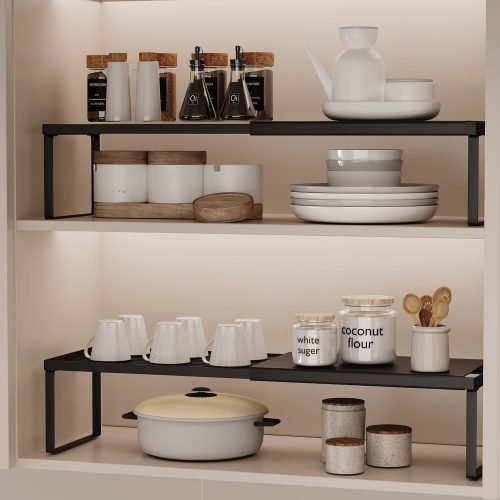
13. Use Adjustable Shelving and Shelf Risers
Fixed shelves at random heights waste space. Adjustable shelving or simple shelf risers let you stack items without wasting the air above them. Cost: Low to Medium
14. Add a Lazy Susan Turntable for Deep Shelves and Corners
Deep shelves are great for storage but terrible for finding things. A lazy Susan spins items to the front, so you never lose the jar of honey at the back again. Cost: Low
15. Use the Back of the Door and Under-Shelf Baskets
Add a door rack, hanging baskets under shelves, or small stackable bins to use space you did not know you had. Cost: Low
How to Organize a Small Pantry in 5 Simple Steps
Great storage only works with a simple system. Follow these steps whether you have a cabinet, a closet, or a cart.
- Empty everything and check dates. Pull everything out, wipe the shelves, and toss expired items. You will be surprised how much space you gain.
- Sort by category. Group items like baking supplies, snacks, canned goods, grains and pasta, and breakfast foods.
- Create zones by how often you use things. Daily items go at eye level. Occasional items go higher or lower.
- Contain and label. Use clear bins, jars, and a label maker so everyone in your home knows where things go.
- Restock with first in, first out. Put newer items at the back and older ones at the front so nothing expires unnoticed. Not sure how long something lasts? The USDA FoodKeeper offers storage guidelines for pantry, fridge, and freezer foods.
Bonus tip: Keep a short pantry list on your phone or fridge. It stops you from buying a fourth jar of cumin.
After each grocery trip, take five minutes to put things back in their zones. That tiny habit keeps clutter from creeping back.
Common Small Pantry Mistakes to Avoid
Most pantry problems come from a few simple mistakes:
- Buying bins before measuring. Always measure first.
- Overloading door racks. Check the weight limit.
- Using deep shelves without pull-outs or bins. Items at the back get forgotten.
- Keeping things you never use. Be honest about what stays.
- Skipping labels. If you share the kitchen, labels save arguments.
- Storing food near heat or moisture. Keep pantry foods in a cool, dry spot away from the stove, dishwasher, and sink.
Small Pantry Ideas on a Budget: Cost Guide by Price Level
Here is a quick way to match ideas to what you want to spend:
| Budget | Ideas that work |
|---|---|
| Under 25 USD | Baskets, labels, over-the-door rack, hanging wire baskets, LED lights |
| 25 to 75 USD | Rolling cart, cube shelf, lazy Susans, shelf risers |
| 75 USD and up | Slim pull-out pantry, tall cabinet, custom shelving |
Swipe left or right to view all columns →
Pro tip: Start with the cheapest changes first. Often, labels and a few bins make a bigger difference than expensive furniture.
Best Pantry Organizers and Storage Products for Small Kitchens
You do not need to buy everything, but these pantry organizers make pantry organization easier:
- Clear stackable bins to group snacks and baking supplies so you can see what you have
- Glass or airtight canisters to keep flour, rice, pasta, and cereal fresh
- Lazy Susan turntables for oils, sauces, and deep corners
- Label maker or waterproof labels so every zone is easy to follow
- Shelf risers to double your usable shelf space
- Over-the-door organizer for spices and small items
- Slim rolling cart for narrow gaps
Pantry Zones for Snacks, Baking, and Small Appliances
If you want your pantry to work even harder, give certain items their own zone:
- Snack zone. A low basket so kids can help themselves.
- Baking zone. Flour, sugar, and baking tools together in one bin.
- Appliance zone. Heavier small kitchen appliances, such as blenders, on a lower shelf.
- Bulk zone. Extra groceries on a high shelf, with a step stool.
Small Kitchen Pantry FAQs
What can I use instead of a pantry in a small kitchen?
You can use a bookcase, cube shelf, rolling cart, repurposed kitchen cabinet, or over-the-door organizer as a pantry. Choose based on your floor space and whether you rent. Renters often do best with freestanding or damage-free options that can move with them.
How do I organize a small pantry?
Start by emptying and sorting everything by category. Then create zones based on how often you use items. Use clear bins and labels, keep daily items at eye level, and use vertical space with shelf risers and door racks.
How do you maximize storage in a small kitchen with no pantry?
Use space that is often wasted: the back of doors, wall space, and the gap beside the fridge. A slim cart, cube shelf, or wall-mounted baskets can create extra pantry storage without taking up much room.
Where should a pantry go in a small kitchen?
The best spot is close to where you cook and unpack groceries, such as near the fridge or prep area. If there is no room, a nearby hallway, closet, or dining area can work as backup storage.
How deep should pantry shelves be?
Around 10 to 14 inches works well for most pantry items. Anything deeper tends to hide items at the back, so add pull-out bins or a lazy Susan if you have deeper shelves.
Small Kitchen Pantry Ideas: Start With One Change Today
A small kitchen does not have to mean a messy kitchen. Whether you have a spare cabinet, a slim gap beside the fridge, or just an empty wall, there is a small kitchen pantry idea that fits your space and your budget.
Pick one idea from this list, follow the 5-step setup, and give it a week. You will likely notice how much calmer your kitchen feels, and how much easier it is to find what you need.