It’s 7 a.m. You’re half asleep, hunting for a clean mug, a filter and the sugar, all at once. The coffee maker is on one counter, the beans are in a cupboard across the room, and the spoons are… somewhere.
That’s exactly the problem a home coffee station solves. It’s one dedicated spot where everything you need to make coffee lives together, so mornings get faster and your kitchen gets calmer.
Below you’ll find 25 coffee station ideas for home, from small-space coffee bars and hidden cabinet setups to budget DIY builds.
Table of Contents
What Is a Home Coffee Station? (And Is Building One Worth It?)
A coffee station (also called a coffee bar or coffee nook) is a dedicated spot at home that holds everything you need to make coffee. That means the machine, mugs, beans or pods, sweeteners and a few extras.
Think of it as a tiny café corner that you built yourself.
Why Build a Coffee Bar at Home? 4 Everyday Benefits
- Faster mornings: no more hunting for filters, spoons or sugar.
- Less clutter: supplies live in one place instead of across three cupboards.
- A friendly spot for guests: visitors can make their own cup without asking where things are.
- Lower coffee spending: you buy fewer café drinks once a good home setup is ready.
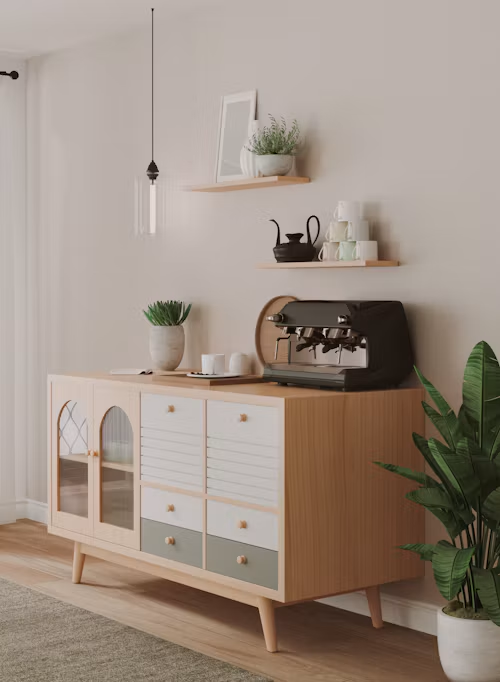
Coffee Station Essentials: The Must-Have Checklist for Your Home Coffee Bar
Good news: you don’t need a lot to start. You probably own half of this already.
The basic coffee station checklist
- Coffee maker: drip, pour-over, French press, pod machine or espresso machine
- Coffee grinder: optional, but helpful if you buy whole beans
- Coffee beans, grounds or pods: stored in airtight containers, with a small drawer or basket for coffee pod storage
- Mugs: enough that you aren’t washing one every single morning, plus simple mug storage like a hook rail or an open shelf
- Sweeteners, syrups and stirrers: sugar, honey, cinnamon, spoons
- Milk or creamer: plus a small frother if you like lattes
- Electric kettle: handy for pour-over, French press and tea
- A tray or organizer: keeps everything grouped and tidy, like a mini coffee station organizer
- Napkins and a small cloth: for quick spill cleanup
- One decorative touch: a plant, a small sign or a framed print
Which Coffee Maker Is Best for a Home Coffee Station?
Pick based on how much space you have, how many cups you make and how much effort you want in the morning.
| Coffee maker | Best for | Space needed | Cost level |
|---|---|---|---|
| Drip machine | Several cups at once, busy mornings | Medium | Low to mid |
| Pour-over | Great flavor in a small space | Very small (needs a kettle) | Low |
| French press | Simple, rich coffee | Very small (needs a kettle) | Low |
| Pod machine | Speed, one cup at a time | Small | Low upfront, higher running cost |
| Espresso machine | Lattes and café-style drinks | Larger (plus a grinder) | Higher |
Swipe left or right to view all columns →
How to Make a Coffee Station Look Like a Real Coffee Bar
Here’s something most guides skip. A coffee maker on the counter is not a coffee station.
If you put the machine on a surface and hide every mug in a cupboard, it just looks like a coffee machine on your counter. The difference is in the styling and grouping.
6 Easy Coffee Bar Decor Ideas That Make It Feel Like a Café
- Display your favorite mugs. Hang them on hooks or stack them on an open shelf. This makes the biggest difference.
- Use glass jars. Fill them with coffee beans, sugar or tea bags. They add texture and a café feel, and they double as handy coffee bar accessories.
- Group everything on a tray. A tray creates a clear “coffee zone” and makes cleaning easier.
- Add a small sign or chalkboard. Even a simple “COFFEE” sign tells the eye what this spot is for.
- Use the wall above it. A shelf, a pegboard or a small framed print makes the corner feel finished.
- Keep to one color palette. Matching or similar mugs and containers look tidy, even when the items are different.
A good rule of thumb: if it doesn’t help you make coffee, it should stay off the coffee station. A little decor is lovely, but function comes first.
Where to Put a Coffee Station at Home: Best Spots and Placement Rules
Before you pick a style, pick a spot. The right location makes your home coffee bar easy to use every day. The wrong one gets abandoned by week two.
4 simple rules for choosing the spot
- Stay near an outlet. Your coffee maker, kettle and grinder all need power.
- Stay close to water and a bin. You’ll need to fill the machine and dump old grounds, so don’t pick a spot that’s down the hall and around the corner.
- Keep it away from the main cooking area. Then coffee-making doesn’t get in the way of dinner prep, and the cook doesn’t get in the way of your coffee.
- Follow your morning path. A spot you walk past naturally gets used more.
Good places for a home coffee station
- A corner of the kitchen counter
- The end of a kitchen island
- A pantry shelf or walk-in pantry
- A dining room sideboard or hutch
- A living room bookshelf or console table
- A corner of your home office
Small-Space Coffee Station Ideas for Apartments and Tiny Kitchens
No counter space? No problem. These five small space coffee station ideas work in apartments, rentals and compact kitchens.
1. Countertop Tray Coffee Station
A simple tray turns one corner of your counter into a mini coffee bar. Put the coffee maker, a couple of jars and two mugs on it, and you’re done. It’s easy to clean and easy to move.
Best for: renters and small kitchens | Space: about 2 ft (60 cm) | Cost: Low | Effort: Very low
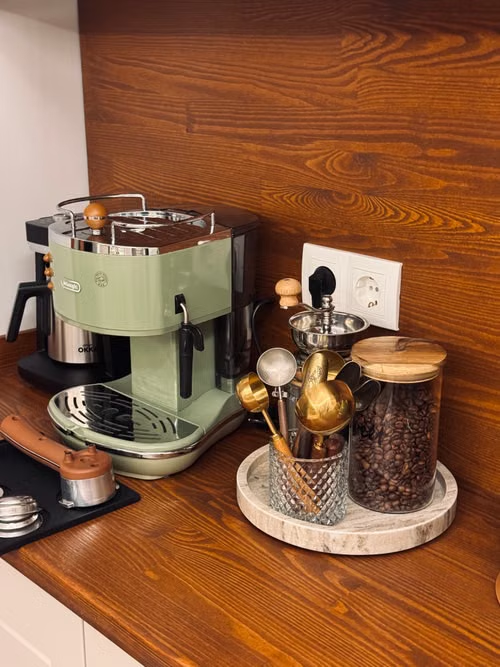
2. Rolling Coffee Cart (Bar Cart Coffee Bar)
A bar cart or kitchen cart rolls out in the morning and tucks away afterward. It also moves to the living room when guests come over. A coffee bar cart is a rental-friendly choice, too, because nothing gets drilled into the wall.
Choose one with a solid top and a sturdy frame, because grinders and espresso machines vibrate.
Best for: renters, tiny kitchens | Space: small floor footprint | Cost: Low to mid | Effort: Low
3. Floating Shelf Coffee Bar
When floor space is tight, go vertical. Mount a few floating shelves above a counter or console and create zones: one for brewing, one for display and one for backup supplies.
Anchor them into studs, and keep the lowest shelf near waist height.
Best for: very little floor space | Space: wall only | Cost: Low to mid | Effort: Medium (needs drilling)
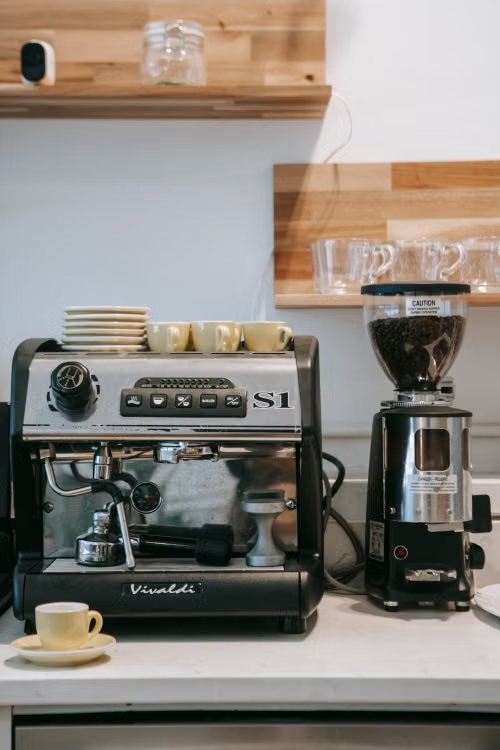
4. Fridge-Side Coffee Nook
That awkward narrow gap beside your fridge? It can become a tidy coffee nook. A slim cart or narrow shelf fits, and the fridge is right there for milk.
Best for: narrow, unused gaps | Space: very narrow | Cost: Low | Effort: Low
5. Slim Console Coffee Bar
A narrow console or wall unit uses a small stretch of wall well. Closed doors below hide supplies, and an open shelf above shows off your favorite mugs.
Best for: small dining areas and hallways | Space: narrow wall | Cost: Mid | Effort: Low
Hidden Coffee Station Ideas: Cabinet, Pantry and Closet Coffee Bars
Prefer a clean, clutter-free look? A hidden coffee station lets you close the doors on the mess and keep your kitchen looking calm.
6. Cabinet Coffee Station (Built-In Coffee Bar Look)
Turn an existing cabinet into a built-in coffee station. Keep the machine on the shelf, mugs above and supplies below. Think of it as a coffee bar cabinet without the renovation. When you’re done, just close the door.
Sliding, pocket and lift-up doors work especially well, because they don’t swing into your way. Open the doors while the machine is brewing so steam can escape.
Best for: minimalist kitchens | Space: one cabinet | Cost: Low to mid | Effort: Low to medium
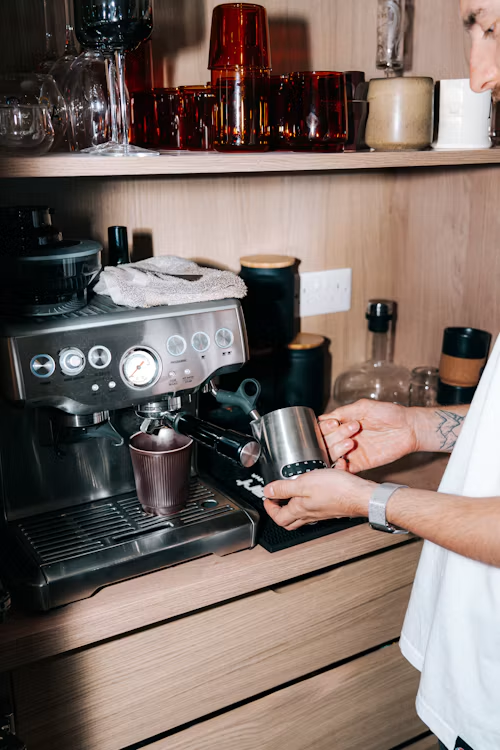
7. Pull-Out Shelf Coffee Station
No counter space? A pull-out shelf slides your coffee maker out when you need it and tucks it back afterward. A pull-up shelf rises to counter height, so the machine can stay plugged in.
This one is a bit more of a project, so you may want a carpenter.
Best for: kitchens with a spare cabinet | Space: inside a cabinet | Cost: Mid to high | Effort: Higher
8. Pantry Coffee Nook
A pantry already holds mugs, snacks and dry goods, so it’s a natural home for your coffee gear. Use one shelf or a small counter inside the pantry to keep your main counters clear.
Best for: homes with a pantry | Space: one pantry shelf | Cost: Low | Effort: Low
9. Closet Coffee Bar
An underused closet can become a self-contained coffee bar. Add a waist-height shelf, hooks on the inside of the door for spoons or filters, and a small rechargeable light or LED strip.
It’s a great trick for apartments where every square foot counts.
Best for: apartments and minimalists | Space: one closet | Cost: Low to mid | Effort: Medium
Coffee Station Ideas Outside the Kitchen: Office, Dining Room and Living Room
Your coffee station doesn’t have to live next to the stove. These ideas bring the coffee to where you actually spend your time.
10. Home Office Coffee Corner
A small cart or shelf in your home office means fewer trips to the kitchen and more focus. Keep a kettle and a water bottle nearby for refills.
A pegboard above the cart is a neat way to hang tools and small cups.
Best for: work-from-home days | Space: a corner | Cost: Low to mid | Effort: Low
11. Dining Room Sideboard or Hutch Coffee Bar
A sideboard or hutch works beautifully as a coffee bar for entertaining. Use the top for brewing, the upper shelves for display, and the lower cabinets for backup supplies like filters and extra beans.
Best for: hosting guests | Space: one furniture piece | Cost: Mid | Effort: Low

12. Bookshelf Coffee Bar
Many bookshelves have a lower shelf that does very little. Turn it into a coffee spot with a small tray to mark the boundaries.
Measure the gap first. Your coffee maker needs enough vertical room, including the lid.
Best for: using space you already own | Space: one shelf | Cost: Low | Effort: Low
13. Living Room Console or Bedroom Coffee Corner
A console table in the living room makes a lovely drinks spot for guests. A small corner of the bedroom can work as a quiet “wake-up” station with a compact brewer and a kettle.
Place a tray under the machine to protect the furniture from drips.
Best for: guests and slow mornings | Space: a console top | Cost: Low to mid | Effort: Low
Budget and DIY Coffee Station Ideas You Can Build This Weekend
You don’t need to spend much to build a great DIY coffee station. These five ideas are friendly on your wallet.
14. Repurposed Dresser Coffee Bar (DIY)
An old dresser or desk can become a stylish coffee bar. The drawers give you plenty of storage, and a fresh coat of paint or new hardware makes it feel brand new.
Best for: DIY lovers | Space: one furniture piece | Cost: Low | Effort: Medium
15. Pegboard Coffee Station Wall
A pegboard above your coffee spot gives you instant structure. Hang cups, spoons, small baskets and a milk pitcher, and rearrange anytime. It adds a light industrial look, too.
Best for: small spaces, renters (with removable hooks) | Space: wall | Cost: Low | Effort: Low to medium
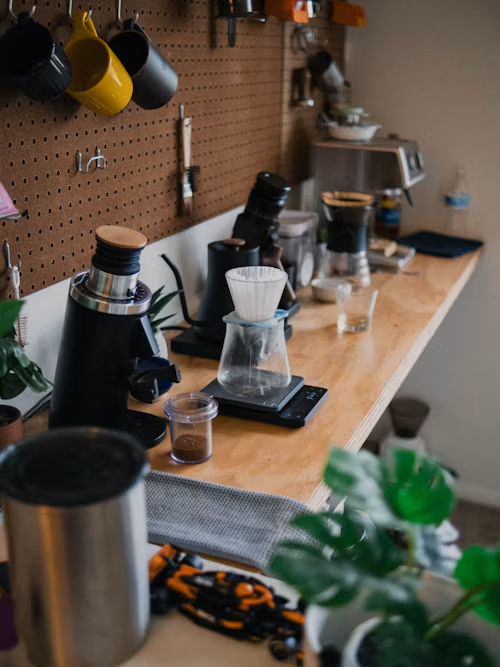
16. Hanging Mug Rack (Easy Mug Storage)
A wall rack or hook rail frees up counter space and gives you that café feel. HGTV shares a copper-pipe version that costs about $25 and takes an afternoon.
Best for: saving counter space | Space: wall | Cost: Low | Effort: Low
17. Chalkboard Coffee Bar Wall
A small chalkboard or message board behind your station adds personality and costs very little. Write a “menu of the day” or a friendly note, and change it with the seasons.
Best for: adding character on a budget | Space: small wall area | Cost: Low | Effort: Low
18. Labeled Canisters and a Home Café Menu
Mismatched jars look charming when they have clear labels. Add labels for coffee, tea and sugar, and print a little framed “menu” of the drinks you make.
It’s cheap, it’s personal, and guests love it.
Best for: hosts and gift-givers | Space: counter or shelf | Cost: Low | Effort: Low
Coffee Station Styles: Modern, Farmhouse, Industrial and Seasonal Coffee Bar Decor
Once the basics are in place, style is where the fun starts, and coffee bar decor is the easiest way to show off your personality. Pick the look that matches the rest of your room, so your station feels like it belongs there.
19. Modern Minimalist Coffee Station
Think clean lines, neutral colors and very few items on show. Keep one or two display pieces, like a beautiful machine and a single plant, and hide everything else in drawers or cabinets.
Best for: calm, uncluttered homes | Space: any | Cost: Low to mid | Effort: Low
20. Farmhouse Coffee Bar
Warm wood, white paint, wire baskets and labeled jars create that cozy farmhouse feel. A woven tray and a few enamel or ceramic mugs finish the look.
Best for: cozy, traditional homes | Space: a counter or hutch | Cost: Low to mid | Effort: Low
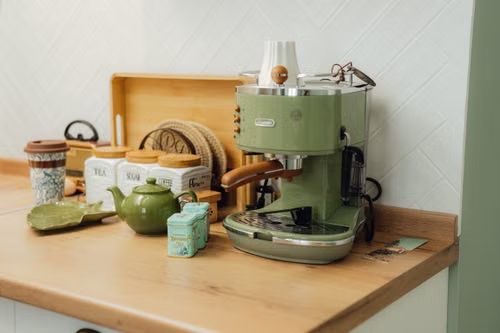
21. Industrial Coffee Station
Mix dark metal, raw wood and pipe-style shelves for an industrial look. A pegboard or a concrete-look countertop adds to the vibe.
Best for: loft, urban and dark-toned spaces | Space: wall plus counter | Cost: Mid | Effort: Medium

22. Colorful Coffee Bar
Love color? Use it! Try a simple mix: mostly one main color, some of a second and a small pop of a third. A colorful kettle, bright mugs or a painted accent wall are easy ways to start.
Best for: cheerful, creative homes | Space: any | Cost: Low to mid | Effort: Low
23. Seasonal Coffee Station Decor
Keep a neutral base and swap small items with the seasons. Think pumpkins and warm tones in fall, greenery in spring, and festive touches for the holidays. A chalkboard makes changing the theme easy.
Best for: people who love decorating | Space: any | Cost: Low | Effort: Low

Iced Coffee and Cold Brew Station Ideas for Warm Weather
Most guides only show hot coffee. If you love iced coffee, here are two ideas that keep your cold drinks easy.
24. Iced Coffee Station
Set up a spot with tall glasses, reusable straws and a small ice bucket or tray. Add syrups and a milk frother, and you have a café-style iced coffee bar.
If you have room, a small beverage fridge keeps milk and drinks close by.
Best for: warm weather and iced latte fans | Space: a counter or cart | Cost: Low to mid | Effort: Low
25. Cold Brew Station
Cold brew usually steeps for many hours (often 12 to 24), so plan a dedicated fridge spot for the jar or pitcher. Keep a filter, a big jar and a few bottles together on one tray so the process stays simple.
Best for: make-ahead mornings | Space: counter plus a fridge shelf | Cost: Low | Effort: Low
Coffee Station Setups Compared: Cost, Space and Effort
Not sure where to start? This table shows the main setups side by side, so you can pick the one that fits your space, budget and effort level.
| Setup | Best for | Space needed | Installation | Cost | Effort |
|---|---|---|---|---|---|
| Tray corner | Renters, small kitchens | About 2 ft (60 cm) of counter | None | Low | Very low |
| Rolling cart | Renters, flexible spaces | Small floor footprint | None | Low to mid | Low |
| Floating shelves | Very little floor space | Wall | Wall mounting | Low to mid | Medium |
| Cabinet station | Minimalist kitchens | One cabinet | Minimal | Low to mid | Low to medium |
| Pull-out shelf | No counter space | Inside a cabinet | Hardware needed | Mid to high | Higher |
| Pantry nook | Homes with a pantry | One pantry shelf | None | Low | Low |
| Closet bar | Apartments | One closet | Minimal | Low to mid | Medium |
| Hutch or sideboard | Hosting guests | One furniture piece | None | Mid | Low |
| Bookshelf shelf | Using what you own | One shelf | None | Low | Low |
| Repurposed dresser | DIY lovers | One furniture piece | Paint and hardware | Low | Medium |
Swipe left or right to view all columns →
How Much Does a Home Coffee Station Cost? (Budget Tiers)
A home coffee station can cost almost nothing or a few thousand dollars. The right level depends on how you drink coffee, not just on your budget.
The ranges below are in US dollars and come from coffee retailers’ guides, so treat them as a starting point and check prices in your own market.
| Tier | Typical budget | What you get | Good to know |
|---|---|---|---|
| Starter | About $50–$150 | A simple brewer (drip, pour-over or French press), a decent grinder and fresh beans | OutIn says this is enough for good daily coffee |
| Mid-range | About $200–$400 | A more reliable machine, a better grinder, canisters and a tray | Upgrades mostly improve consistency and convenience |
| Dream setup | About $1,500–$3,000 | An espresso machine, a quality grinder and built-in or furniture upgrades | Retailer examples such as Clive Coffee put an average espresso setup near $3,000 |
Swipe left or right to view all columns →
A sample shopping list for each tier
- Starter: a French press or pour-over dripper, a kettle, a basic grinder, a tray and a couple of jars. Use mugs you already own.
- Mid-range: a quality drip machine or a better pour-over setup, a better grinder, labeled canisters and a small shelf.
- Dream setup: an espresso machine, a quality grinder, a milk frother, a dedicated cabinet or furniture piece and under-shelf lighting.
4 ways to build one on a budget
- Start with furniture you already own. A bookshelf, console or spare shelf works fine.
- Choose ground coffee over pods. Pods can cost much more over time.
- Thrift your mugs and jars. Mismatched pieces look charming together.
- Add style later. Get the function right first, then decorate slowly.
Common Coffee Station Mistakes to Avoid
Across the setups reviewed for this guide, the same problems keep coming up. Here’s how to dodge them.
- Picking a spot far from an outlet or sink. If making coffee means a long walk or a cord across the floor, you’ll stop using the station.
- Not measuring first. A machine that doesn’t fit under a shelf with its lid open is an expensive annoyance.
- Mounting shelves into drywall only. Machines and full mugs are heavy. Anchor into studs, and ask a professional if you’re unsure.
- Overloading one extension cord. Kettles and espresso machines use a lot of power, so plug them into a wall socket where you can.
- Closing the cabinet while brewing. Steam can build up inside a closed cabinet, so open the doors while the machine runs.
- Styling before function. Decor is lovely, but if you can’t reach the mugs or the bin easily, the station won’t last.
- Buying lots of gear on day one. Start with the basics and add pieces once you know your routine.
- Forgetting the cleanup spot. Keep a small bin or compost container nearby for grounds and used pods.
How to Keep Your Coffee Bar Clean, Organized and Clutter-Free
A beautiful station only stays beautiful if it’s easy to maintain. The good news: a few small habits do most of the work.
| How often | What to do |
|---|---|
| Daily | Wipe up spills, empty used grounds or pods and put mugs away |
| Weekly | Wash the tray, wipe jars and containers, and check supplies |
| Regularly | Clean and descale your machine by following the maker's instructions |
Swipe left or right to view all columns →
Easy habits that help
- Use a tray under the machine. It catches drips and protects wood and counters.
- Restock before you run out. Filters, syrups and beans are easy to forget until the morning you need them.
- Store beans in airtight containers. Keep them away from heat and direct sunlight.
- Keep a small bin close. It makes cleanup quick, so you actually do it.
Coffee Station Tips for Hot and Humid Climates (and Power Cuts)
Most coffee station guides are written for cool, dry homes. If your home is hot, humid or has frequent power cuts, a few small changes make a big difference.
- Keep it away from heat. Don’t place your station next to the oven, the stove or a sunny window. Heat and light make beans go stale faster.
- Use airtight jars. Humidity can make sugar and mixes clump, so seal them well.
- Wipe sticky spills quickly. Sugar and syrups attract ants in warm weather. Keep them sealed and clean up right away.
- Keep a manual backup. A French press or pour-over dripper still works when the power goes out, as long as you can heat water another way.
- Lean into iced and cold brew. Hot weather is the perfect time for the ideas in the cold brew section above.
- Buy local when you can. Fresh beans from a nearby roaster often taste better, and local shops can tell you which brewers and jars are easy to find.
Coffee Station FAQs
What is a coffee station?
A coffee station is a dedicated spot at home that keeps everything you need for coffee in one place: the machine, mugs, beans or pods, sweeteners and accessories. It can be a counter corner, a cart, a shelf or a cabinet, and it can be as simple or as styled as you like.
What do I need to set up a coffee station?
At minimum, you need a coffee maker, mugs, coffee or pods, something to sweeten and stir, storage containers and a nearby power outlet. A grinder, kettle, milk frother and tray are helpful extras. Start with the basics and add pieces over time.
Do I need an espresso machine?
No. Drip, pour-over and French press all make great coffee and usually cost less to set up. Choose an espresso machine only if you love lattes and cappuccinos, and plan extra space for a grinder.
Does a coffee station have to be in the kitchen?
No. Kitchens are common because water and outlets are close, but a dining room, living room or home office works well too. Keep a kettle or water pitcher handy and plan an easy route to a sink for refills and cleanup.
What's the smallest space I can use for a coffee station?
A simple coffee station fits in about two feet (60 cm) of counter space or on a compact rolling cart. Use a tray to group supplies, and go vertical with a shelf or hooks if floor space is limited.
Final Thoughts: Start Your Home Coffee Station Today
I hope these coffee station ideas for home show you that a great home coffee bar doesn’t need a big budget, a big kitchen or a designer. It needs a good spot, a simple layout and a few thoughtful touches.
Start small. Pick one corner, set out a tray, and group your coffee gear together. You can always upgrade later.