Picture this: you walk in after a long day, and your front door barely opens because of the shoes piled up behind it. Sound familiar?
If you live in an apartment, a narrow hallway or a home with no mudroom, you are not alone. A tiny foyer can turn into a shoe avalanche in just a few days.
The good news? You don’t need a big space to fix it. In this guide, you’ll find 12 small entryway shoe storage ideas that work for narrow hallways, tiny foyers and small apartment entryways. For each idea, you’ll see how many pairs it holds, roughly what it costs, and who it suits best.
Table of Contents
Quick Picks: Best Shoe Storage for a Small Entryway by Space Type
Short on time? Find your situation in the table below, then jump to that idea.
| Your situation | Best shoe storage idea | Why it works |
|---|---|---|
| Very narrow hallway | Slim wall shelf or narrow shoe cabinet | Uses wall space and keeps the walkway open |
| No floor space at all | Wall hooks or an over-the-door organizer | Uses space you already have |
| You need a place to sit | Entryway storage bench | A seat and hidden shoe storage in one piece |
| Renter, no drilling | Over-the-door organizer, rotating rack or freestanding shelf | No holes in the wall |
| Big family or lots of shoes | Tiered rack, cubbies or a built-in unit | A separate spot for each person |
| Tight budget | Crates, baskets or a DIY shelf | Low cost and flexible |
Swipe left or right to view all columns →
How to Plan Small Entryway Shoe Storage: 4 Checks Before You Buy
Measure first, because most shoe storage mistakes happen when something simply doesn’t fit. A few minutes of planning saves you from returns and frustration.
- Measure your space. Write down the width, depth and height you have available. Most adult shoes are roughly 10 to 12 inches long, so keep that in mind when you check shelf depth. Quick tip: stick painter’s tape on the floor to mark a unit’s footprint, then walk past it for a day to see how it feels.
- Check your walkway and door swing. Open and close the front door fully. A rack or cabinet should never block the door or the path. If you can, keep a clear walking path of about 30 inches or more.
- Count your daily pairs. Be honest about the shoes you really wear each week, not every pair you own.
- Decide: hidden or visible? Some people love seeing their shoes on display. Others want a clean look with everything tucked away. Neither is wrong, but it changes which idea suits you best.
How Many Pairs of Shoes Should a Small Entryway Hold?
For most households, a good rule of thumb is 4 to 8 pairs of everyday shoes in a small entryway. If several people share the foyer, aim for about 2 to 3 pairs per person.
The rest can live somewhere else, like a bedroom closet, an under-bed box or a hall closet. Think of your entryway as a “daily-use zone,” not a full shoe closet.
Here’s a simple example. Imagine a couple sharing a narrow entry. Each person keeps sneakers, one pair of work shoes and one pair of sandals or boots near the door. That’s six pairs, and the rest rotate in and out with the seasons.
12 Space-Saving Shoe Storage Ideas for Small Entryways and Narrow Hallways
Each idea below shows approximate capacity, cost, who it suits best and what to watch out for. Here is what the cost labels mean:
- Low = under about 25 USD
- Mid = about 25 to 100 USD
- High = over 100 USD
Wall-Mounted and Vertical Shoe Storage for Narrow Hallways
When the floor is crowded, look up. Vertical storage is often the smartest hallway shoe storage choice because it uses empty wall space and keeps your walkway clear.
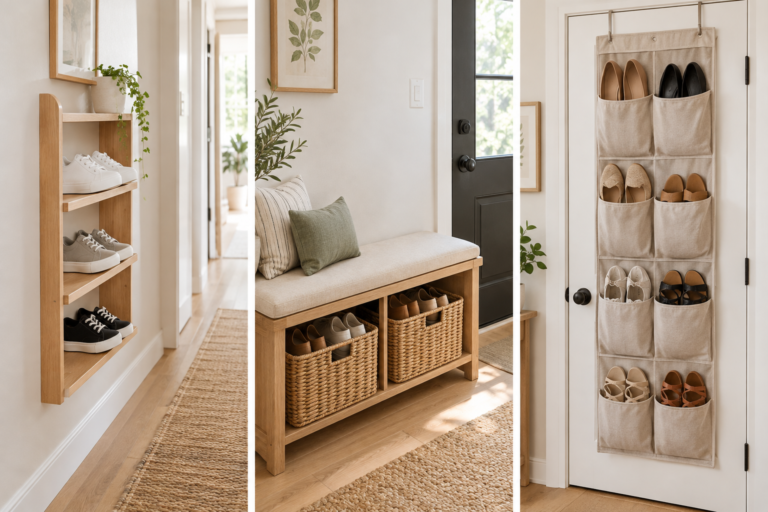
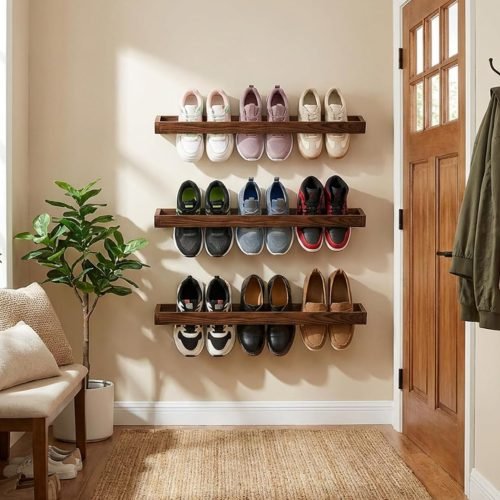
1. Slim Wall-Mounted Shoe Shelf (Floating Shoe Shelves)
A wall-mounted shoe shelf keeps shoes off the floor and leaves the walkway open. Floating shelves also look neat and modern in a small foyer.
- Holds: about 3 to 6 pairs
- Cost: Low to Mid (DIY or buy)
- Best for: narrow hallways with open wall space
- Watch out for: you’ll need to drill and find a sturdy wall spot
Pro tip: Mount the shelves at different heights. Sneakers need less room than ankle boots, and varied spacing makes better use of the wall. You can also add coat hooks under a shelf for keys or a bag.
2. Wall Hooks and Pegs for Hanging Shoes
This one surprises people. A row of sturdy hooks or pegs can hold shoes by the heel, using almost no floor space.
- Holds: about 2 to 4 pairs
- Cost: Low
- Best for: tiny entries and everyday sneakers
- Watch out for: heavy boots may need stronger hooks
How to set it up (about 15 minutes):
- Choose a spot low on the wall, about a foot above the floor.
- Mark a straight line with a level or a ruler.
- Space the hooks wide enough so shoes don’t bump each other.
- Fix them into a wall stud if you can, or use proper wall anchors.
- Hang each shoe by the heel or collar, one shoe per peg.
The wall above the shoe hooks stays free for coats, hats and bags, which makes this a smart entryway organization trick for small spaces.
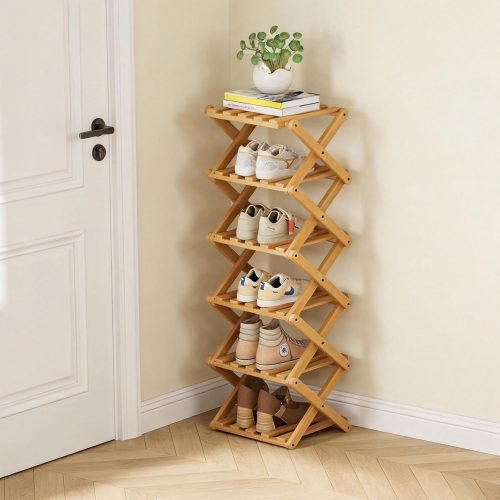
3. Vertical Tiered Shoe Rack for Tight Corners
A tall, narrow shoe rack stacks several levels in a small footprint. It’s a classic for a reason.
- Holds: about 6 to 12 pairs
- Cost: Low to Mid
- Best for: families and anyone with more shoes than floor space
- Watch out for: open racks can look busy, and tall racks can tip
Pro tip: Put everyday shoes on the lower levels and special-occasion pairs higher up. Safety tip: Anchor tall racks to the wall with an anti-tip strap, especially if you have kids or pets.
Multifunctional Entryway Furniture: Benches, Consoles and Cabinets
In a small entry, every piece should work twice as hard. These ideas combine shoe storage with seating or a handy surface.
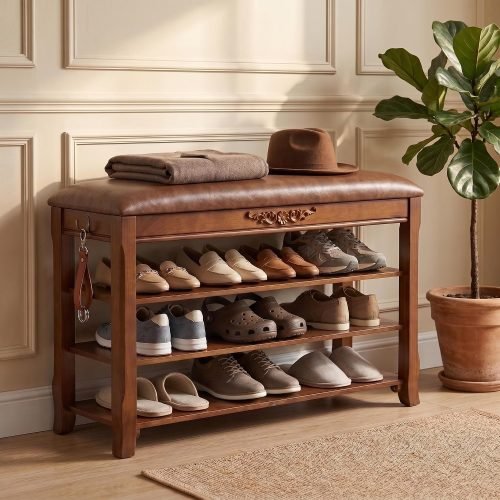
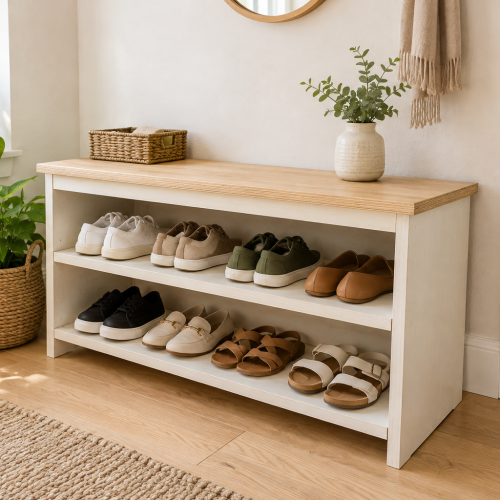
4. Entryway Storage Bench With Hidden Shoe Compartments
A shoe storage bench gives you a seat for putting on shoes and a hidden place to keep them. It’s one of the most popular small-space shoe storage solutions.
- Holds: about 4 to 8 pairs
- Cost: Mid to High
- Best for: entries with a little wall width and a need for seating
- Watch out for: measure the depth, because some benches stick out into the walkway
Pro tip: Slide a few baskets under an open bench to hide the clutter and keep each person’s shoes separate.
5. Slim Console Table With Shoe Baskets or Pull-Out Trays
A narrow console table gives you a surface for keys and mail, plus storage underneath. Add baskets or trays for shoes, and it becomes a stylish entryway shoe storage spot.
- Holds: about 3 to 6 pairs
- Cost: Mid to High
- Best for: very narrow hallways that want a polished look
- Watch out for: open baskets can look messy if they’re overfilled
Pro tip: Use matching baskets so the area looks tidy even when it’s full.
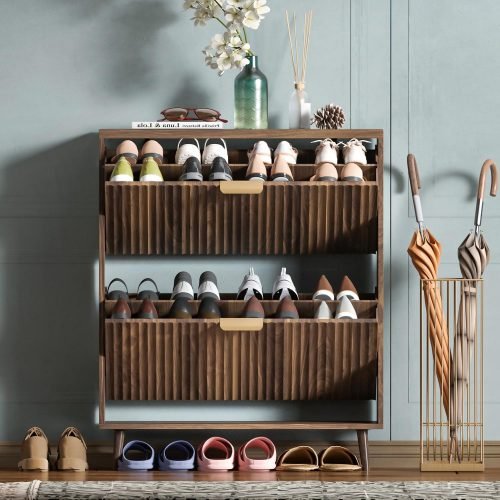
6. Narrow Shoe Cabinet or Flip-Down Shoe Organizer
A narrow shoe cabinet hides the mess behind closed doors. Flip-down (tilting) cabinets are very slim, so they’re great for hallway shoe storage in tight spaces.
- Holds: about 6 to 12 pairs
- Cost: Mid to High
- Best for: people who want a clean, clutter-free look
- Watch out for: if the shoes are damp, choose a cabinet with ventilation slots
Pro tip: Put the cabinet in a corner or beside the front door so the doors can open without hitting anything. Safety tip: Anchor tall cabinets to the wall.
No-Drill Shoe Storage for Renters and Small Apartment Entryways
Renting? You still have great options. These ideas need little or no drilling, so you can set them up fast and take them with you when you move.
7. Over-the-Door Shoe Organizer for Apartments
An over-the-door shoe organizer hangs on the back of a door and uses space you already have. It’s a quick fix for any small apartment entryway.
- Holds: about 6 to 12 pairs
- Cost: Low to Mid
- Best for: apartments and tiny entries with no floor space
- Watch out for: make sure the door still closes properly, and check that the pockets fit your shoe size
Pro tip: Use it for flats, sandals and kids’ shoes. Tall boots usually need another solution.
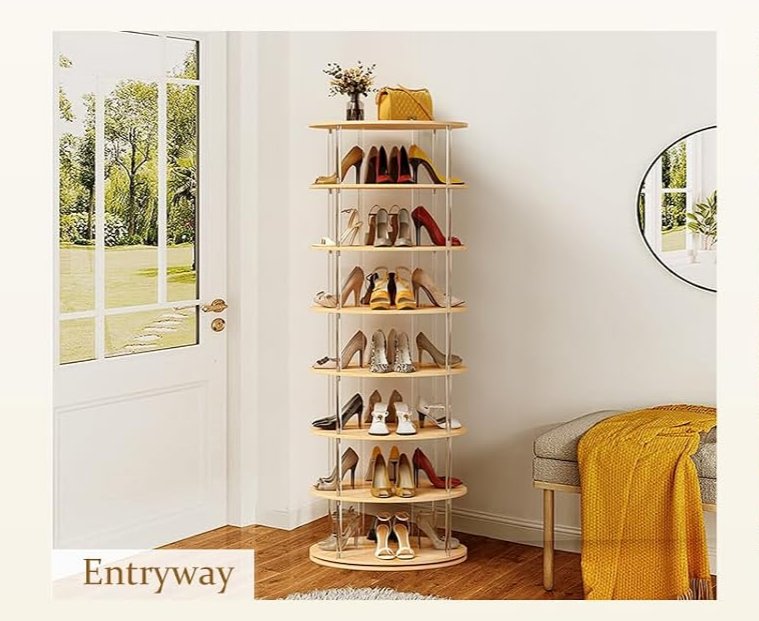
8. Rotating Shoe Rack for Corners
A rotating shoe rack sits in a corner and holds a lot of shoes in a small circle. You just spin it to find the pair you want.
- Holds: often 12 or more pairs
- Cost: Mid
- Best for: small entries with a spare corner and a large shoe collection
- Watch out for: tall versions need enough ceiling height, and the base takes up some floor space
Pro tip: It works well behind a door when there’s a free corner.
9. Slim Freestanding Shoe Shelf and Adhesive Hooks (No Drilling)
If you can’t drill, a slim freestanding shoe shelf is easy to set up and move. Adhesive hooks can also hold light items like bags or a few pairs of flat shoes.
- Holds: about 4 to 8 pairs (shelf), 1 to 2 pairs (hooks)
- Cost: Low to Mid
- Best for: renters, dorm rooms and studio living
- Watch out for: check the weight limit on adhesive hooks before you load them
Pro tip: Clean the wall with a dry cloth first so the adhesive sticks properly.
Budget and DIY Shoe Storage Ideas for Small Entryways
You don’t need to spend much. These ideas are affordable and flexible.
10. Crates and Wire Baskets as DIY Shoe Cubbies
Stack a few crates or wire baskets and you have instant shoe cubbies. Give each family member their own crate to keep things organized.
- Holds: about 3 to 6 pairs
- Cost: Low to Mid
- Best for: families, kids and renters on a budget
- Watch out for: stack them securely, and don’t pile them too high
Pro tip: Label each crate with a name. Kids are much more likely to put their shoes away when they have a spot of their own.
11. DIY Shoe Bench or Shoe Shelf
Prefer to build something yourself? A simple DIY shoe shelf or bench can be made with basic plywood and a few tools. You can paint or stain it to match your home.
- Holds: about 4 to 8 pairs
- Cost: Low to Mid
- Best for: people who enjoy projects and want a custom fit
- Watch out for: avoid untreated softwood near wet shoes, because moisture can damage it
What you’ll need: plywood, wood glue or screws, sandpaper, a protective finish (paint or sealant) and a tape measure.
Quick steps:
- Measure your space and sketch the shelf.
- Cut the boards to size, or ask your hardware store to cut them.
- Sand the edges so they’re smooth.
- Assemble with glue and screws.
- Apply a protective finish and let it dry fully.
Built-In Shoe Storage for Small Entryways
12. Under-Stair or Recessed Wall Shoe Storage
If you have space under the stairs or a wall you can recess, a built-in shoe unit gives you the most storage with the cleanest look.
- Holds: about 6 to 15 pairs or more
- Cost: High
- Best for: homeowners and anyone planning a bigger update
- Watch out for: this usually needs a carpenter or strong DIY skills
Pro tip: Slide-out drawers in an under-stair space keep everything easy to reach.
Open Shoe Rack vs. Closed Shoe Cabinet: Which Is Better for an Entryway?
This is a question many readers ask, so here’s a simple way to decide.
Open racks and shelves let air move around your shoes, which helps with odor and moisture. The downside is that the shoes are on view, so a small entryway can look cluttered.
Closed shoe cabinets hide the mess and keep dust off your shoes, so the foyer looks calm and tidy. The downside is less airflow, so choose a cabinet with ventilation slots if you’ll store damp shoes.
A good middle ground? Use a closed cabinet for most shoes and keep a small open tray for today’s pairs.
How to Store Wet Shoes, Boots and Seasonal Shoes in a Small Entryway
Entryway storage works hardest on rainy and snowy days, so a little planning keeps your floor and your shoes in good shape.
- Use a boot tray or washable mat near the front door to catch water and dirt.
- Let wet shoes dry first before putting them in a closed cabinet.
- Store tall boots on a low shelf, in a basket or in a separate tall unit, since they don’t fit most slim racks.
- Rotate seasonally. In summer, move heavy boots to a bedroom closet and bring sandals forward. In winter, do the reverse.
Shoe Storage for Families, Kids and Guests in a Small Entryway
More people means more shoes, so give everyone a clear spot. That keeps your small entryway organized even on busy mornings.
- One slot or crate per person keeps things fair and tidy.
- Kids’ shoes go low so little ones can reach them on their own.
- Keep a basket or a bench for guests’ shoes, so visitors know where to put theirs.
For example, a family of four might use a tiered rack with one level for each person. Everyone knows where to leave their shoes, and the entry stays clear.
Common Small Entryway Shoe Storage Mistakes to Avoid
A few small mistakes can make a good idea fail. Avoid these:
- Blocking the door or walkway. Always check clearance before you buy.
- Choosing a rack that’s too shallow for your boots or bigger shoes.
- Using untreated wood where wet shoes will sit.
- Overfilling the space. If it’s always overflowing, move some shoes to another spot.
- Skipping wall anchors on tall units. Tall racks and cabinets can tip, so secure them.
- Forgetting the “drop zone.” Add a small hook or tray for keys so the entry stays tidy overall.
FAQ: Small Entryway Shoe Storage Questions Answered
Where should you put shoes in a small entryway?
The best spots are on the wall, behind the door, under a bench or in a slim cabinet. These use space you already have and keep the walkway clear. Pick the option that fits your measurements and your daily routine.
What is the best shoe storage for a very narrow entryway?
For a very narrow entry, choose vertical or wall-mounted options, like a slim wall shelf, a narrow shoe cabinet or hooks. They take up little floor space and don’t block the path.
How many pairs of shoes should a small entryway hold?
Aim for about 4 to 8 pairs of everyday shoes. If several people share the space, plan on roughly 2 to 3 pairs each, and store the rest in a closet or bedroom.
How do you organize shoes by the front door without a closet?
Use wall hooks, a slim shoe rack, an over-the-door organizer or a storage bench. Keep only your daily pairs by the door, and store seasonal shoes somewhere else.
How do you store shoes in a small entryway without drilling?
Try an over-the-door organizer, a slim freestanding shelf, a rotating rack or crates and baskets. These all work without making holes in the wall, which makes them popular with renters.
Final Thoughts: Choosing the Best Shoe Storage for Your Small Entryway
A small entryway doesn’t have to be a stressful one. With the right space-saving shoe storage, even the tiniest foyer can feel calm and organized.
To recap: go vertical for narrow hallways, choose a bench or cabinet if you want hidden storage, and pick no-drill options if you rent. Measure first, keep your daily pairs near the door and rotate the rest.